Project "Chinatown"
"Application & Documentation"
Designed and Made by Kevin, Karl & Eric
We constructed the lofi prototype and brought it to class for critique, and the feedback we received from our peers, the grad students, and our professor, was tremendous for us and we appreciated every bit of it. We took those ideas to heart and looked back at our project, could we implement those great ideas, and would that still fit with our original plan? The answer was yes every time.
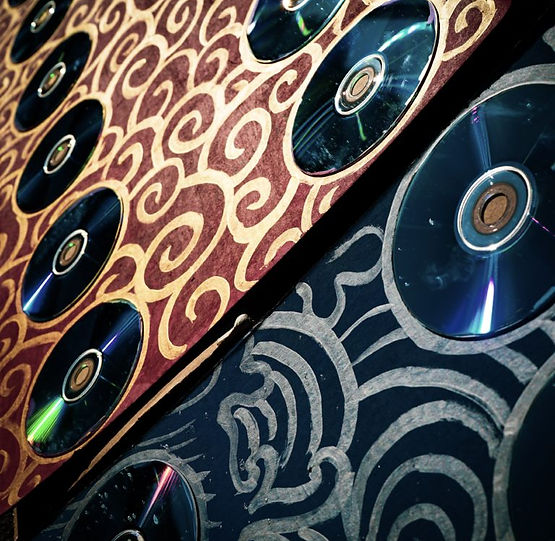
Our group was quick to adopt Jessica’s idea of using the backsides of CDs instead of mirror paper, especially with the concerns brought up by our Professor, Kat, how mirrors could reflect light into eyes and be dangerous for girls wearing skirts. CDs were the perfect solution to all of that, as they refracted light in a way that was beautiful but didn’t reflect a clear image nor would it reflect in a disruptive way. We also really like the idea of making our final product modular so that it would be easier to place and rearrange in a way that would look most aesthetically pleasing and not get in the way of the vendors, customers, and pedestrians.
Taking all of the great feedback into consideration, we were ready to craft our final product. We began our adventure in the Makerspace, measuring the CDs and testing out different alignments of the CDs.

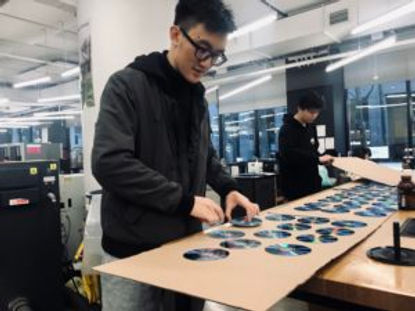
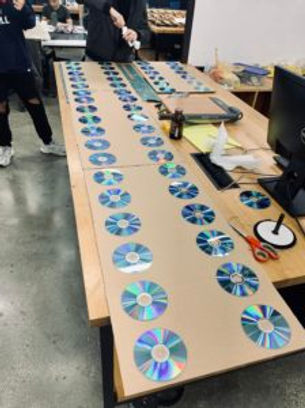

After choosing an alignment we saw as the best fit, we began sticking them to the cardboard and began painting. We wanted to incorporate the traditional Chinese designs that we showed in the initial lofi prototype which did receive good feedback, so we were confident in this decision. We chose four types traditional Chinese Patterns–Cloud Pattern, Wind Pattern, Wave Pattern and Moutain Pattern. Kevin painted the background color with traditional Chinese colors and Karl drew the pattern with reflective metalic colors.
Wind Pattern


Window Pattern

Ocean Wave Pattern


Mountain Pattern
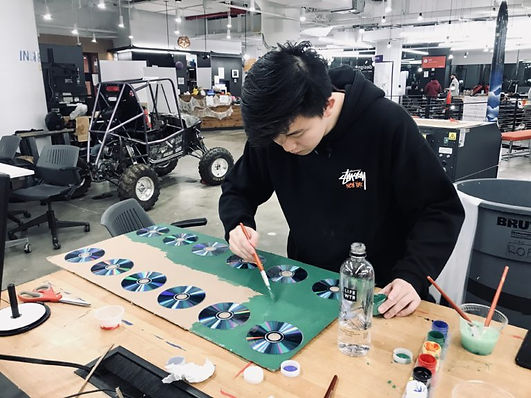
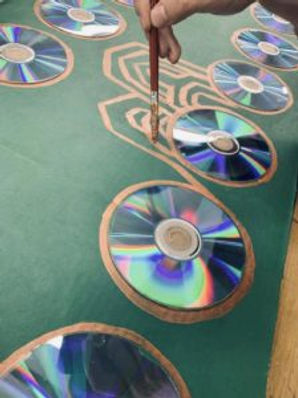

With the art complete, we began building the bases that would allow them to stand.

After our final project was completed, it was time to implement it at our site and gauge feedback. We wanted to go at an optimal time that would not disrupt the vendors as they set up, so we woke up early at 7 AM and gathered our materials and arrived at our site around 8:30 AM. Before the vendors started setting up, we chose an empty place to set down our CD art-boards and started attaching them to the bases.


After we assembled the art we began recording people’s reactions to the project, as well as interviewed some of the passerby’s and vendors.


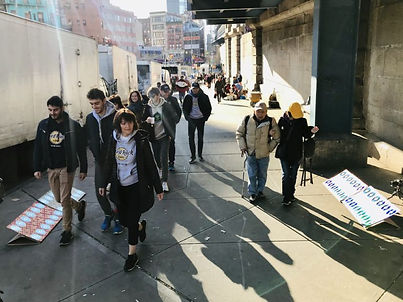
Though we were confident in our work, we did not expect our project to receive a response as positive as it did in the final version. People walking by almost always looked at our art, some took pictures, some talked about it with their companions, and some people (locals, vendors, and pedestrians alike) actually came up to us to ask about it.


We took advantage of the opportunity to interview people when they asked us about the project, we asked them how they felt about the art, was it beautiful? Did it make the area feel brighter? More inviting? And we were surprised to have so much positive and happy feedback.
One lady who was a vendor in the area was so happy about our art that she offered to give us a whole pack of gum (since that’s what she had on her at the time). She loved our project and said it was really creative, and she was generally very wholesome about it.
Another old man who was a customer in the area first thought that our art was computer-generated, and when we told him that we hand-painted those, he was very surprised and commended our work and agreed that the place looked a lot more beautiful with these installations.


Finally, we interviewed three tourists passing by what they thought about it, oddly enough, they turned us down, but then came back after a little bit and agreed to answer our questions. They really liked the traditional Chinese elements that we incorporated into our design and said it was “pretty cool” and “very nice”.

"Reflection"
All in all, we believe this project to be very successful. We started off with the large scope of Manhattan’s Chinatown, did extensive research, and scoped down to the underpass area that we would finally use. We then gauged this scope with our professor who gave us some recommendations on what to research and interesting things to think about. Our group took all of this into consideration and researched other underpass installations, how our project would affect stakeholders, and how to make our project intervene in that site in a beautiful and creative way. We narrowed our scope down even further with that research and built a lofi prototype around our idea and did a few iterations to see what would look best, we brought that prototype in and received great feedback in which we implemented into our final project. We tested a few iterations on the final project and stuck with our favorite and then implemented it into the site, where we observed people’s reactions and interviewed a few people to see how well-received our project was. This project was definitely a learning process for all of us and we were happy to be able to work together and create such a great experience for many people at our site.